Introducing CredTrack: Real-Time Visibility Into Your Credentialing

Introducing CredTrack: Real-Time Visibility Into Your Credentialing

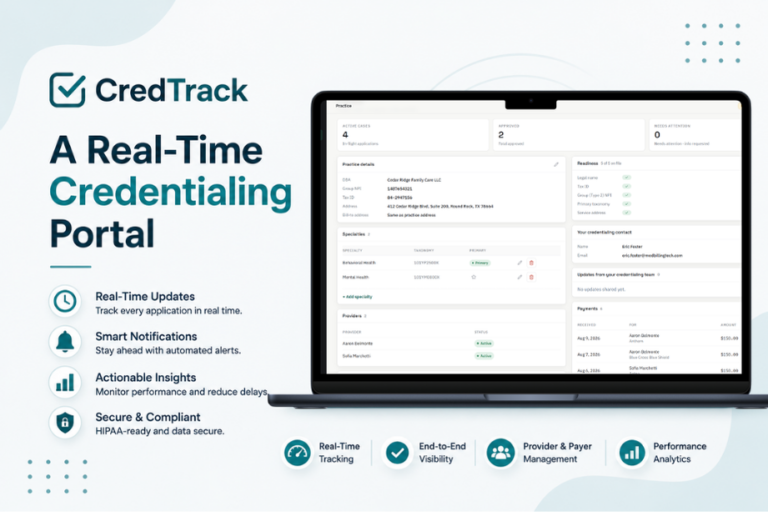
Credentialing is usually a black box. You submit applications, hand off documents, then wait with no clear view of where anything stands. CredTrack changes that: a real-time credentialing portal with live application status, renewal reminders, secure document storage, and a full audit trail, free with every MedBillingTech credentialing engagement.
Behavioral Health Credentialing in Tennessee: TennCare and Commercial

Behavioral Health Credentialing in Tennessee: TennCare and Commercial

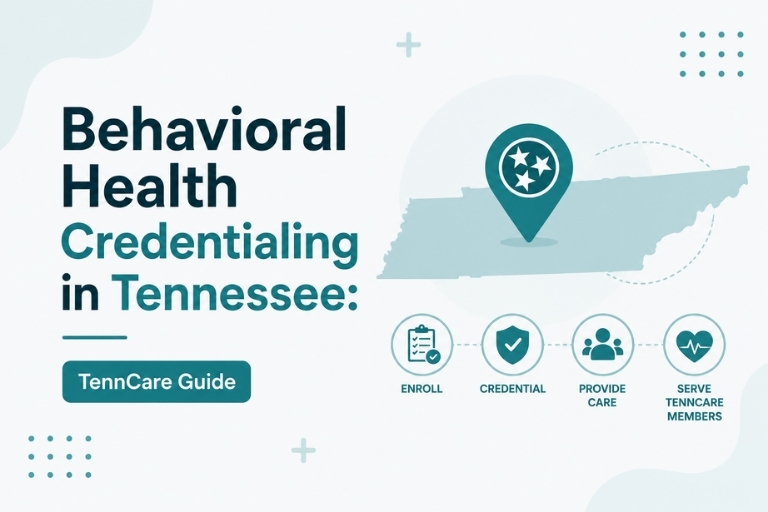
Behavioral health credentialing in Tennessee runs through a managed care model where nearly every Medicaid dollar flows through one of three private plans. Getting enrolled with the state is only the first step; contracting with the MCOs is what lets you bill. Tennessee also skips the behavioral health carve-out most states use. Here's how it all works, on both the TennCare and commercial sides.
Locum Tenens Credentialing: How It Works

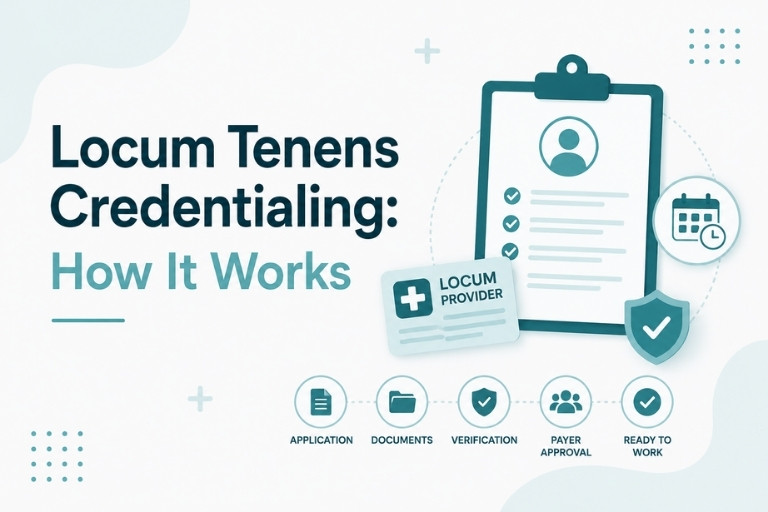
Locum Tenens Credentialing: How It Works

Locum tenens credentialing works differently from standard credentialing because a locum usually bills under the absent physician's identity, not their own. It keeps the schedule covered without waiting out a 90-day credentialing cycle, but it comes with a specific set of rules: the Q6 modifier, the 60-day limit, exclusion screening, and wide payer variation. Here's how it all works.
Hospital Privileging vs Payer Credentialing: What’s the Difference?

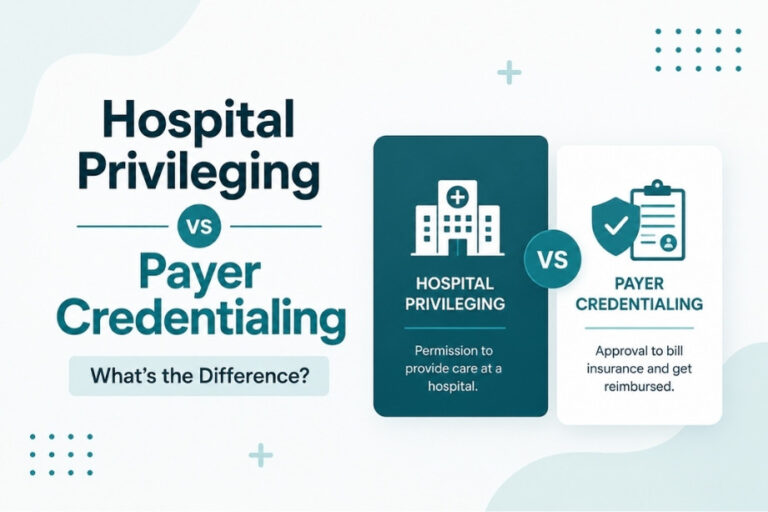
Hospital Privileging vs Payer Credentialing: What’s the Difference?

Payer credentialing and hospital privileging get used interchangeably, but they answer completely different questions. One determines whether an insurer will pay you. The other determines whether a hospital will let you perform specific procedures on its premises. A provider can have one without the other, and confusing them creates costly gaps. Here's how they differ and why it matters.
Do You Need Credentialing Software or a Service?

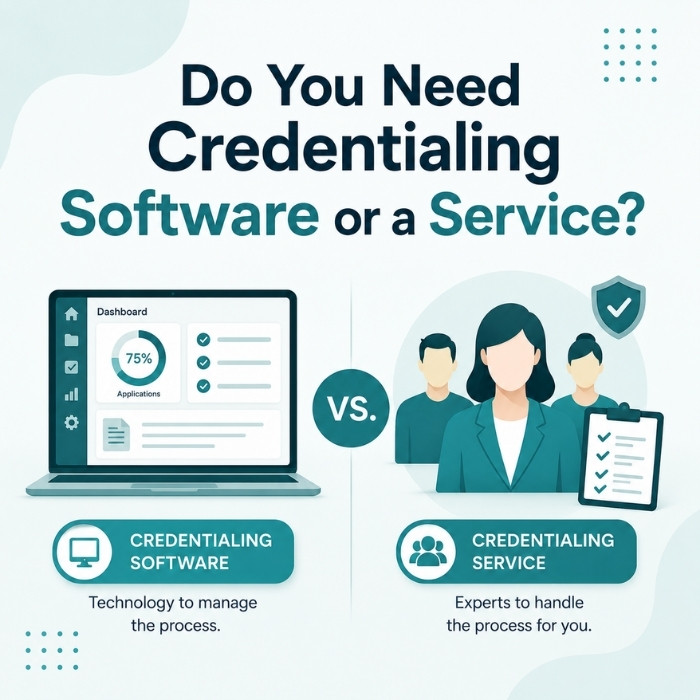
Do You Need Credentialing Software or a Service?

The software-versus-service question really comes down to one thing: whether you have credentialing expertise in-house. Software is a tool that makes a knowledgeable person faster. A service is a team that supplies the knowledge and does the work. Buying the wrong one is how practices end up paying for a platform nobody has time to run. Here's how to tell which fits.
Behavioral Health Credentialing: Why It’s Different and What to Watch For

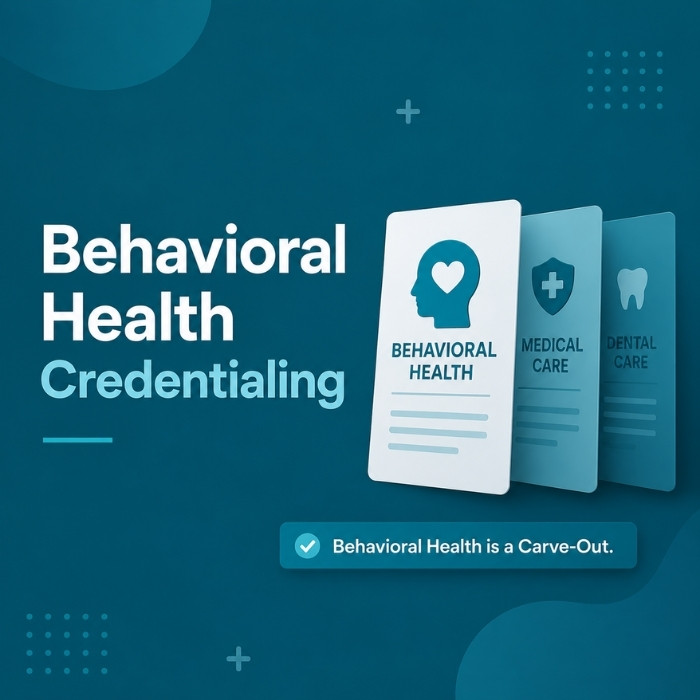
Behavioral Health Credentialing: Why It’s Different and What to Watch For

Behavioral health credentialing follows the same basic mechanics as any other credentialing, but a handful of differences make it harder, slower, and easier to get wrong: the carve-out structure most payers use, a thicket of license types that vary by state, supervision rules for associate-level clinicians, and separate substance use disorder requirements. Here's what makes it distinct and how a group should handle it.